Smoke Remediation Sandpoint Idaho | North Idaho Flood and Fire
Professional Smoke Remediation in Sandpoint Idaho
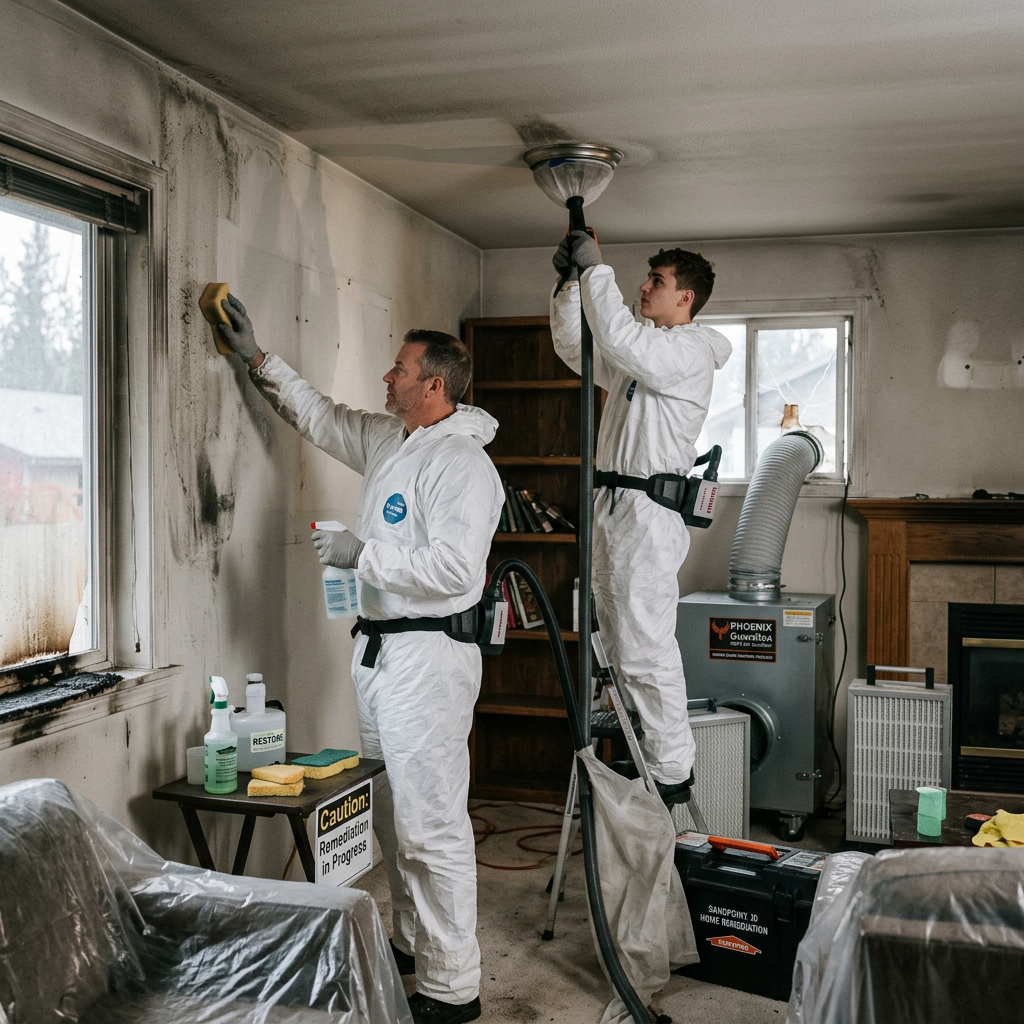
Smoke damage is one of the most pervasive and technically challenging types of property damage to address — and one that is frequently underestimated by property owners who focus on the visible fire damage while the invisible smoke damage continues to cause harm. Smoke penetrates deep into building materials, spreads far beyond the area of the fire through HVAC systems and air pressure differentials, deposits acidic soot residues on every surface it contacts, and leaves persistent odors that can make a property unlivable long after the visible fire damage has been repaired. North Idaho Flood and Fire provides expert smoke remediation services in Sandpoint and throughout North Idaho, applying the technical knowledge, professional equipment, and proven methodologies required to address smoke damage completely — not just superficially.
Smoke remediation is a specialty within the broader fire restoration discipline, and it requires specific knowledge of smoke chemistry and behavior that goes well beyond general cleaning expertise. Different types of fires produce different types of smoke residues — dry, powdery residues from fast-burning paper and wood fires; wet, oily residues from slow-burning synthetic materials and plastics; protein residues from cooking fires that are nearly invisible but create powerful odors; and fuel oil soot from furnace puff-back events that is among the most difficult smoke damage to remediate. North Idaho Flood and Fire's smoke remediation specialists are trained in identifying these different residue types and applying the specific cleaning agents and techniques that are effective for each — the foundation of a truly successful smoke remediation.
Smoke Damage from Wildfires and Chimney Events
In addition to smoke damage from structure fires, North Idaho Flood and Fire addresses two smoke damage scenarios that are particularly common in the Sandpoint area: wildfire smoke intrusion and chimney and fireplace smoke events. Wildfire smoke intrusion occurs when the dense smoke from nearby wildfires — increasingly common in North Idaho's fire-prone landscape — infiltrates homes through HVAC systems, air leaks, and open windows, depositing fine particulate matter on interior surfaces and creating air quality conditions that are unhealthy and in extreme cases unlivable. North Idaho Flood and Fire's wildfire smoke remediation service addresses both the surface residues and the indoor air quality impacts, using HEPA filtration and professional cleaning techniques to restore healthy indoor air quality.
Chimney and fireplace smoke events — including chimney fires, downdrafts that push smoke into the living space, and puff-back events from oil and gas heating equipment — are common causes of smoke damage in Sandpoint-area homes, particularly in older homes with deteriorating chimney systems. These events often distribute smoke and soot throughout the home via the HVAC system, creating smoke damage in rooms far from the fireplace or furnace. North Idaho Flood and Fire responds to these events with the same thorough assessment and remediation approach as any smoke damage situation, ensuring that all affected surfaces and systems are addressed completely. Learn more about smoke remediation.
Odor Elimination: Getting Rid of Smoke Smell Permanently
Smoke odor is one of the most persistent and difficult-to-eliminate consequences of fire and smoke damage — and "airing out" a smoke-damaged property simply does not work. Smoke odor compounds bond to building materials at the molecular level and continue to off-gas for months or years if not addressed with professional deodorization techniques. North Idaho Flood and Fire uses three primary professional deodorization technologies depending on the specific odor scenario: thermal fogging, which disperses a deodorizing fog that penetrates the same surfaces the smoke penetrated and neutralizes odor compounds on contact; ozone generation, which produces ozone that oxidizes odor compounds in the air and on surfaces during a timed treatment of the empty structure; and hydroxyl generation, which produces hydroxyl radicals that break down odor compounds safely in occupied or semi-occupied spaces.
The selection of the right deodorization approach — or the right combination of approaches — depends on the type and extent of smoke damage, the materials involved, and the practical constraints of the remediation project. North Idaho Flood and Fire's technicians make these selections based on experience and technical knowledge, ensuring that the deodorization treatment is appropriate for the specific situation and achieves permanent odor elimination rather than temporary masking. Call (208) 263-1058 for smoke damage assessment. Contact us online anytime.
HVAC System Cleaning After Smoke Damage
One of the most commonly overlooked aspects of smoke remediation is the HVAC system — and it is one of the most important. When a fire or smoke event occurs in a home with a forced-air heating and cooling system, smoke and soot particles are drawn into the return air ducts and distributed throughout the duct system, depositing residues on duct surfaces and often reaching the air handler, heat exchanger, and coils. If the HVAC system is not cleaned as part of the smoke remediation, it will continue to distribute smoke odors and soot particles throughout the home every time it runs — recontaminating cleaned surfaces and making complete odor elimination impossible. North Idaho Flood and Fire includes HVAC system assessment and, where indicated, professional duct cleaning as part of our comprehensive smoke remediation service, ensuring that this critical component of the remediation is not overlooked.