Sewage Damage Cleanup Sandpoint Idaho | North Idaho Flood and Fire
Professional Sewage Damage Cleanup in Sandpoint Idaho
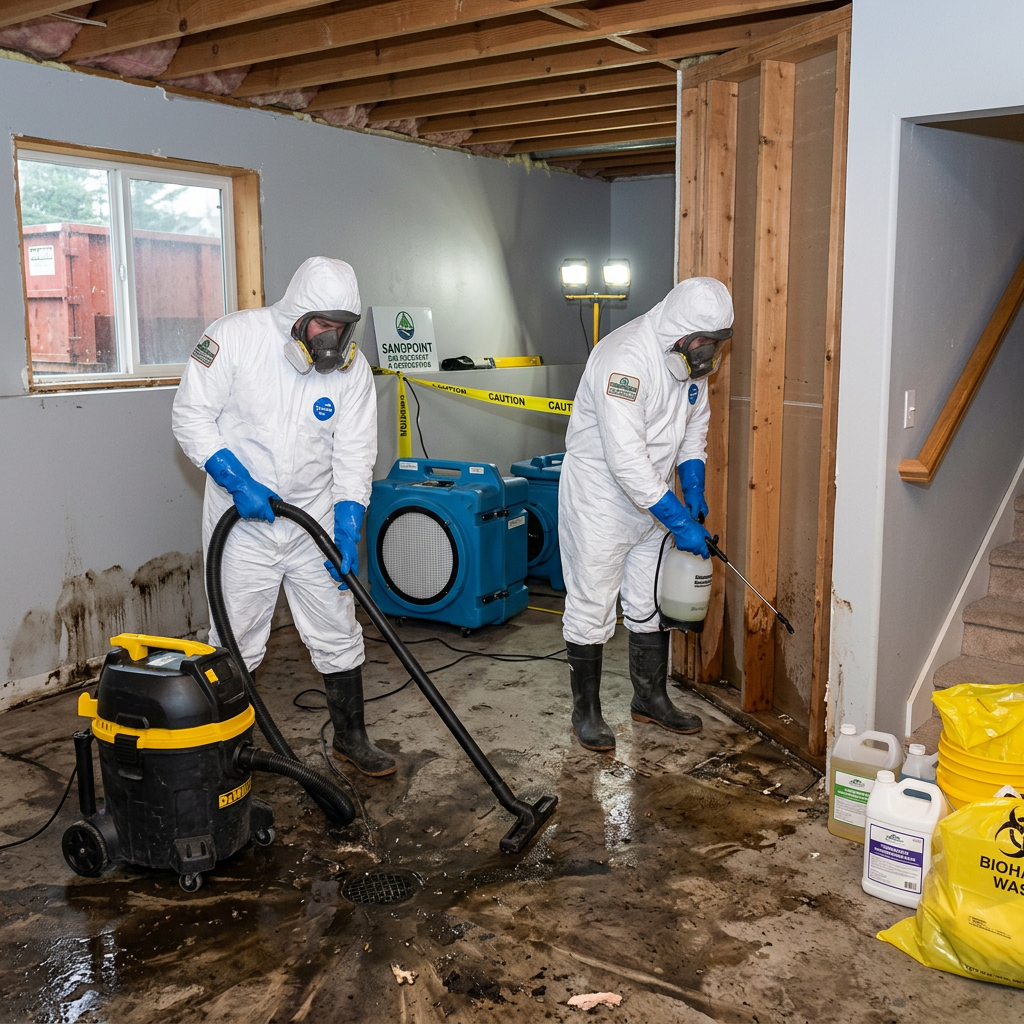
Sewage damage is one of the most serious and hazardous property emergencies a homeowner can face — and it requires immediate professional response. Raw sewage contains a complex mixture of bacteria, viruses, parasites, and other pathogens that pose genuine health risks to anyone exposed to them, and the contamination spreads rapidly through porous building materials, requiring thorough and technically specific decontamination to make the affected area safe again. North Idaho Flood and Fire provides emergency sewage damage cleanup services in Sandpoint and throughout North Idaho, responding 24 hours a day with the trained personnel, protective equipment, and professional-grade decontamination capabilities required to address sewage damage safely and completely.
Sewage damage is classified as Category 3 water damage — the most hazardous category — regardless of the specific source of the sewage event. This classification triggers specific response protocols: affected porous materials including drywall, insulation, flooring, and any soft contents that came into contact with sewage must be removed and disposed of as biohazardous waste; structural surfaces must be thoroughly cleaned and treated with EPA-registered antimicrobial agents; and the area must be tested to confirm decontamination is complete before restoration work can proceed. North Idaho Flood and Fire's sewage cleanup team follows these protocols rigorously on every job — there are no shortcuts when health and safety are at stake.
Common Causes of Sewage Backup in North Idaho Homes
Sewage backups in Sandpoint-area homes occur for several distinct reasons, each requiring a different response approach. Main sewer line blockages — caused by tree root intrusion, pipe deterioration, grease buildup, or foreign object obstruction — are among the most common causes of sewage backup, forcing raw sewage back through the lowest fixtures in the home (typically basement floor drains, toilets, and showers). Municipal sewer system overloads during heavy rainfall events can cause backflow into connected private sewer lines, particularly in older systems without backflow prevention devices. Septic system failures — very common in the rural and semi-rural properties throughout Bonner County — can cause sewage backup into the home when the septic tank reaches capacity or the drain field becomes saturated or fails.
Understanding the cause of a sewage backup matters for both the immediate cleanup and the long-term prevention strategy. North Idaho Flood and Fire's assessment process identifies the source of the sewage event and provides recommendations for addressing the underlying cause — whether that's a drain line inspection and clearing, a septic system evaluation, or the installation of a backflow prevention device. Learn more about our sewage cleanup services.
The Sewage Cleanup and Decontamination Process
North Idaho Flood and Fire's sewage damage cleanup process is thorough, systematic, and executed with the strict safety protocols that biohazardous material handling requires. Our technicians arrive in appropriate personal protective equipment — respirators, protective suits, and gloves — and begin by assessing the extent of sewage contamination throughout the affected areas, including testing for contamination that may have wicked into walls, flooring, and other structural materials beyond the immediately visible sewage area. We remove and bag all contaminated porous materials for disposal as biohazardous waste, then proceed to the cleaning and disinfection of all remaining structural surfaces with EPA-registered antimicrobial cleaners appropriate for the specific pathogens of concern.
Following decontamination, we address odor elimination — one of the most persistent challenges in sewage cleanup — using professional deodorization technologies including thermal fogging and hydroxyl generation that neutralize odor compounds at the molecular level rather than simply masking them. Once the area is confirmed clean and dry, we develop and execute a restoration scope that returns the affected space to its pre-loss condition completely — including all necessary material replacement, structural repairs, and finish work. Call (208) 263-1058 immediately for sewage emergencies — this is not a situation where delay is acceptable. Contact us online anytime.
Protecting Your Family During and After Sewage Cleanup
If you experience a sewage backup in your Sandpoint home, the most important immediate action is to keep everyone — family members and pets — out of the affected area until professional cleanup is complete. Do not attempt to clean up sewage yourself without proper protective equipment and professional-grade disinfectants; standard household cleaners are not sufficient to eliminate the pathogens present in raw sewage. Do not run HVAC systems that may distribute contaminated air throughout the home. Shut off electricity to affected areas if there is any risk of electrical hazard from the sewage water. Document the damage with photographs before cleanup begins for insurance purposes. Then call North Idaho Flood and Fire at (208) 263-1058 — we'll take it from there, handling everything safely and professionally so your family can return to a clean, safe home as quickly as possible.